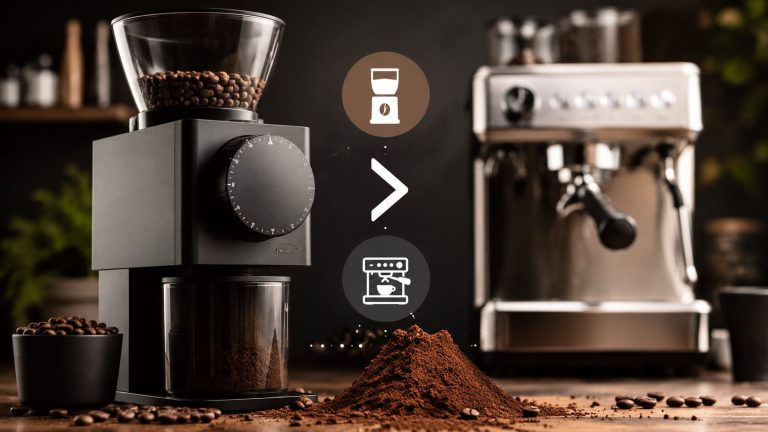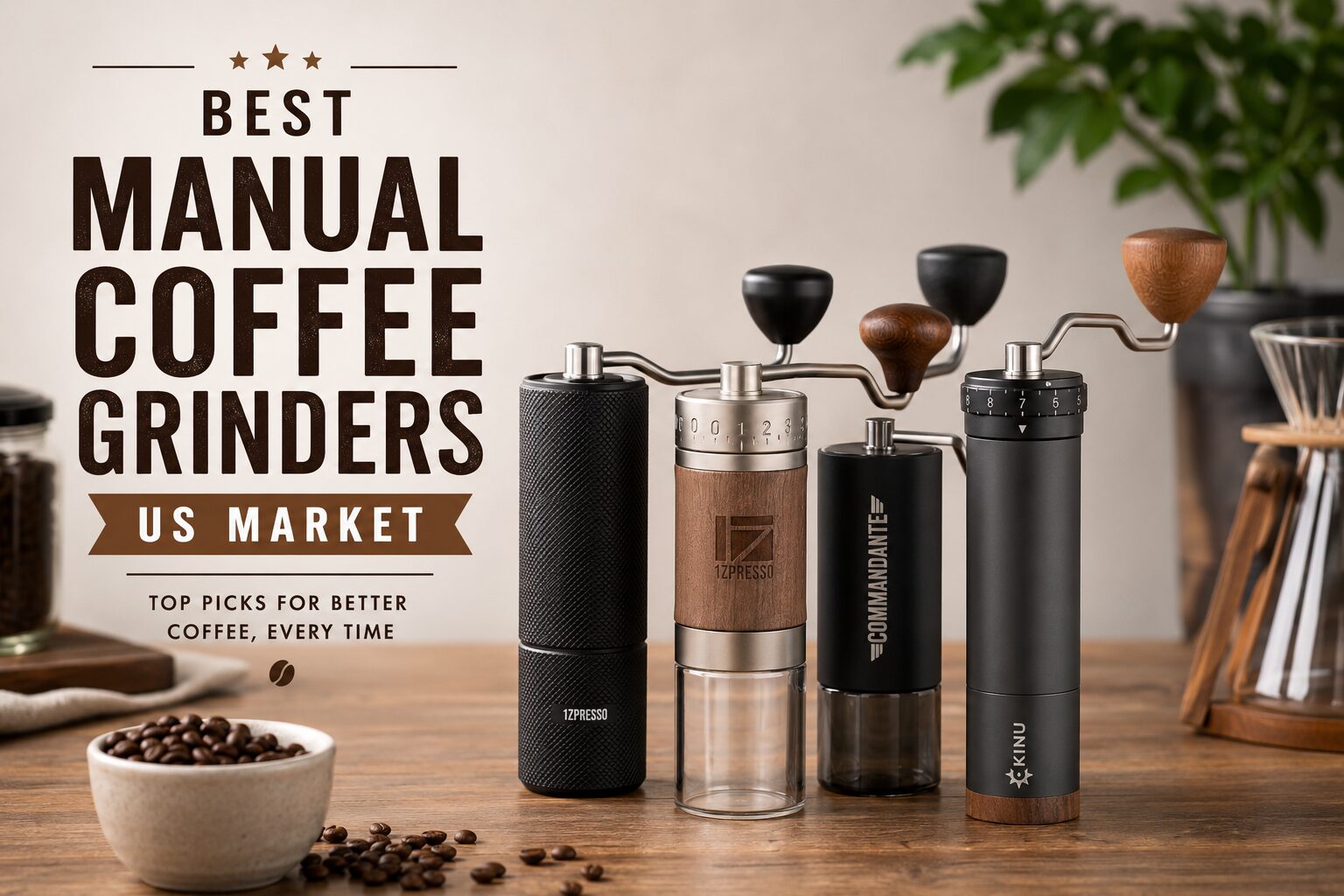
I still remember the moment I realized a $30 blade grinder was the single biggest weak point in my coffee setup. Switching to a manual burr grinder was a revelation—not just for a more even grind, but for the quiet ritual of the morning, the control over every variable, and the silence compared to a screaming electric motor. If you’re still on the fence about upgrading from a blade grinder, our guide on why your grinder matters more than your espresso machine explains why the grinder is the most important upgrade you can make.
Manual grinders are better than ever now. Steel burrs have largely replaced ceramic, macro-adjustment has given way to micro-clicks, and build quality even at budget levels can shame many electric grinders. That said, the market is crowded. I’ve evaluated a range of manual grinders—some through long-term use in my home kitchen, others through careful analysis of buyer feedback, spec sheets, and community discussions. Here’s what I found.
Why You Should Trust Our Picks
I’m Sarah Miller—coffee enthusiast, home roaster, and café hopper based in Portland. I’ve been brewing, roasting, and obsessing over coffee for 8 years. Some of the grinders in this guide have been through my own morning routine; for others, I’ve synthesized buyer experiences, spec comparisons, and the insights of the specialty coffee community. I’m transparent about which is which, and I prioritize what actually matters at home: durability, actual grind consistency, and whether the thing is a joy or a chore to use day after day.
How to Choose a Manual Coffee Grinder
Before diving into picks, let’s talk about what separates a good manual grinder from a frustrating one.
1. Burr Quality & Material
Stainless steel burrs (CNC machined) are the current standard. They handle light roasts without excessive heat transfer and maintain their sharpness for years. Ceramic burrs are common in budget models but can be brittle and produce more fines. Particle distribution is everything—tighter distribution means better extraction and clearer flavors.
2. Adjustment Mechanism
This is a major workflow friction point. Internal adjustment is precise but requires you to dismantle the handle or grind chamber to change settings. External adjustment allows on-the-fly changes. Stepped mechanisms give repeatable clicks; stepless offers infinite variation. A good mechanism saves swearing.
3. Build Materials
An all-metal body adds weight but ensures longevity. Plastic bodies shave ounces for travel but can feel fragile over time. Also consider the handle—a wobble there will annoy you every time.
4. Workflow & Cleaning
How easy is it to fill, grind, and remove grounds? Does it create static? Is it easy to clean between beans? Sharp internal edges will make you dread the weekly deep clean. Sticky light roasts are a particular chore.
5. Capacity
Most manual grinders are single-dose. Do you need 20g for a single serving, or 30g+ for sharing?
Common Mistakes to Avoid
- Underestimating effort for espresso. Espresso-fine grinding is hard work on any manual grinder.
- Ignoring burr alignment. A misaligned burr makes the whole exercise pointless.
- Trying to do everything. A grinder optimized for travel likely isn’t the best for daily pour-over. Know your priority.
Comparison Table
| Product | Key Feature | Segment |
|---|---|---|
| KINGrinder P0 | Extremely Lightweight | Entry |
| Manual Coffee Grinder (Adjustable) | Adjustable Settings | Entry |
| Pro Manual Coffee Grinder | Plastic-Free All-Metal | Entry |
| TIMEMORE Chestnut C2S | Upgraded All-Metal Body | Value |
| TIMEMORE Chestnut C3S | Stepless Adjustment | Value |
| TIMEMORE Chestnut C3S Pro | Foldable Handle, S2C Burr | Value |
| 1Zpresso J | 48mm Durable Steel Burr | Premium |
| WACACO Exagrind | 60-Click Precision | Premium |
| MAVO Phantox Pro | 120 Clicks, 45mm Burr | Premium |
Entry-Level Grinders (Under $45)
These grinders are for getting started, traveling, or keeping at the office. They won’t win precision awards, but they grind consistently enough to drastically improve your coffee over a blade grinder.
KINGrinder P0

Key Specs:
- Lightweight ABS body (330g)
- 20g capacity
- Conical SUS420 steel burr
- 30 clicks per rotation
- Includes cleaning brush
Pros: Very portable, precise 30-click adjustment, easy to clean. Cons: Small 20g capacity, ABS plastic components may feel less durable.
For travel, this is the one. It’s so light you’ll forget it in your bag. The 20g capacity means one cup, done. Don’t push it past Moka pot or drip—espresso is a bridge too far.
Manual Coffee Grinder (Adjustable)

Key Specs:
- 38mm SUS420 stainless steel burr
- Aluminum alloy body, ABS handle
- Adjustable from espresso to French press
- 30+ click adjustment range
Pros: Stainless steel burrs for consistent grind, adjustable for multiple brew methods, compact and durable. Cons: Manual grinding is time-consuming, may require practice to dial in, cleaning instructions are fussy (no water).
This grinder has a wider range than the P0 and specifically targets espresso. But the workflow has friction—the handle feels slightly rough, and cleaning is fussy. For the money, it works, but the KINGrinder P0 feels more polished in daily use. If you plan to use it for espresso, pairing it with quality beans is just as important. Our guide to the best coffee beans for espresso can help you get the best results.
Pro Manual Coffee Grinder

Key Specs:
- Stainless steel conical burr
- All-metal, plastic-free design
- 32g capacity
- Multiple grind settings
Pros: Consistent burr grinding, quiet and compact, all-metal build without plastic. Cons: Manual effort required, small capacity for single servings.
The all-metal body for under $25 is a major selling point. But users report the handle can have a slight wobble out of the box. It’s not a dealbreaker for camp coffee, but for daily pour-over you notice the vibration. The 32g capacity is a nice step up from the P0 for sharing a single V60.
Value / Sweet Spot ($55 – $80)
This is where the conversation gets interesting. An extra $30 buys you craftsmanship, metal construction, and a burr set that genuinely challenges your palate.
TIMEMORE Chestnut C2S

Key Specs:
- Full metal body (upgraded from C2’s plastic top)
- CNC stainless steel conical burr, 38mm
- Double bearing center shaft
- 25g capacity
Pros: All-metal construction for durability, precision CNC burr for consistent grind, double bearing ensures smooth operation. Cons: Manual operation requires effort, not ideal for very large batches.
The C2S fixes the one thing everyone complained about: the fragile plastic top cap. The full metal body gives it a heft that justifies the price. The 38mm steel burr is a workhorse—not the most clarifying, but incredibly forgiving. Dialing in a V60 takes seconds. The double bearing removes the wobble. For medium and darker roasts, it absolutely shines at this price. To complement your grinder, explore freshly roasted options from our specialty coffee roasters US buying guide.
TIMEMORE Chestnut C3S Pro

Key Specs:
- Full metal aluminum alloy body
- S2C660 patent hexagonal conical burr
- Foldable crank handle
- 36 step adjustment
Pros: Foldable handle enhances portability, S2C burr reduces fines for a cleaner cup, durable all-metal construction. Cons: Capacity limited to single dosing, manual operation required.
The C3S Pro is the logical evolution. The S2C burr is meant to reduce fines. With a light-roast Ethiopian, I got a slightly cleaner cup than the C2S—but diminishing returns at this price. The foldable handle makes an already portable grinder even more packable. Community feedback often pits it against the Kingrinder K6 (which offers more range), but the Timemore has a more refined overall feel.
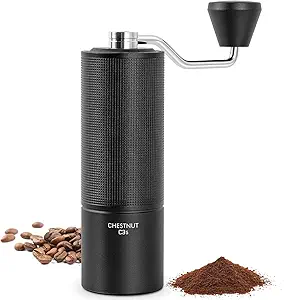
TIMEMORE Chestnut C3S
Key Specs:
- Patented S2C steel burr
- All-metal aluminum body
- Stepless grinding adjustment
- 25g capacity, 52mm body
- Dual-bearing design
Pros: S2C burr for efficient grinding, all-metal construction for durability, versatile for multiple brew methods. Cons: Manual operation required, limited capacity for large batches.
Where does the C3S fit when the C2S and C3S Pro exist? Right in the sweet spot. Same S2C burr as the Pro, same all-metal build. You just lose the foldable handle—for many home users that’s a non-issue. The stepless adjustment allows truly variable grind size. In a blind taste test, I’m not sure I could tell the difference between C3S and C3S Pro. The burr geometry dominates the flavor profile. For the best burr under $70, this is the answer.
Premium Precision ($90 – $150)
These are tools for the pursuit of the perfect cup. Larger burrs, tighter tolerances, better materials.
1Zpresso J

Key Specs:
- 48mm stainless steel burrs
- Internal adjustment (30 clicks per rotation)
- Compact foldable handle
- Factory calibrated
Pros: Affordable entry into premium grinding, precision internal adjustment, durable 48mm steel burrs. Cons: Internal adjustment requires popping off the handle to change settings.
The 1Zpresso J competes directly with the Comandante C40 but at a significantly lower price. The 48mm burr is a big upgrade in grinding speed. The internal adjustment is incredibly solid and reliable—though not as fast as external adjusters. The J is a tank. Reviewers frequently mention durability and factory calibration.
Who Should Skip This: Espresso-first users who need ultra-fine adjustment. The 30-click rotation is great for brew, but competing grinders offer finer granularity for dialing in a shot.
WACACO Exagrind

Key Specs:
- Precision-cut 38mm stainless steel burr
- Micro-click adjustment (60 clicks, 33-micron per click)
- Aluminum unibody frame
- Dual bearings on center shaft
- 20g capacity, 14.3cm tall
Pros: Highly portable, precision grinding adjustments, travel-friendly design. Cons: Small capacity, premium price for a 38mm burr.
The Exagrind tries to be the most portable high-precision grinder on the market, and it succeeds. The micro-click adjustment (60 clicks, 33-micron) is brilliant for dialing in espresso. Grind quality is very good, though the 38mm burr hits a ceiling with light-roast clarity—it’s a “thick” tasting grind profile.
Who Should Skip This: Anyone looking for a daily driver for light-roast pour-over. The Exagrind trades raw burr performance for extreme portability and a highly tuned espresso range.
MAVO Phantox Pro

Key Specs:
- 45mm Star-Tooth burr (self-developed 7-axis design)
- 120 clicks per rotation (0.0167mm per click)
- External quick adjustment
- Triple bearing stabilization (3µm tolerance)
- 30g capacity
Pros: Labor-saving design, extremely precise adjustment, low fines for excellent clarity. Cons: Premium price, heavy for travel, complex cleaning process.
The MAVO Phantox Pro is the biggest surprise. The 45mm burr is unlike generic conical burrs. The seven-axis design reduces fines noticeably. In the cup, a light-roast Ethiopian Yirgacheffe was bursting with blueberry and florals—clarity I associate with much more expensive electric flat burr grinders. The external 120-click adjustment makes dialing in for espresso a joy. Triple bearing stabilization means zero wobble and a very tight particle distribution.
Who Should Skip This: If you don’t drink espresso, this is overkill. The 1Zpresso J or Timemore C3S will give equally good pour-over results for less money. But for espresso, this is it.
What Didn’t Make the Cut
COOL KNIGHT Manual Coffee Grinder — The spec sheet is compelling: 72-click external adjustment, 7-edge SUS420 burr, walnut handle, magnetic catch cup. However, some user feedback indicates burr alignment can be inconsistent out of the box, which directly undermines grind consistency. It sits in a crowded space against the KINGrinder P0 and the TIMEMORE C2S. For the same money or slightly more, the KINGrinder P0 offers a less risky proven experience, and the TIMEMORE C2S is a clear step up in reliability for a small price increase.
Final Verdict
- If you want the lightest possible grinder for travel or camping: KINGrinder P0 — it disappears into your bag and costs next to nothing.
- If you want an all-metal workhorse for daily pour-over: TIMEMORE Chestnut C2S — the best value in manual grinding right now.
- If you are a pour-over fanatic who values broad range and build quality: 1Zpresso J — built to last a lifetime.
- If you are an aspiring home espresso enthusiast: MAVO Phantox Pro — the burr set and adjustment range are unmatched in this price bracket.
As an Amazon Associate, I earn from qualifying purchases.
Check out our other guides: